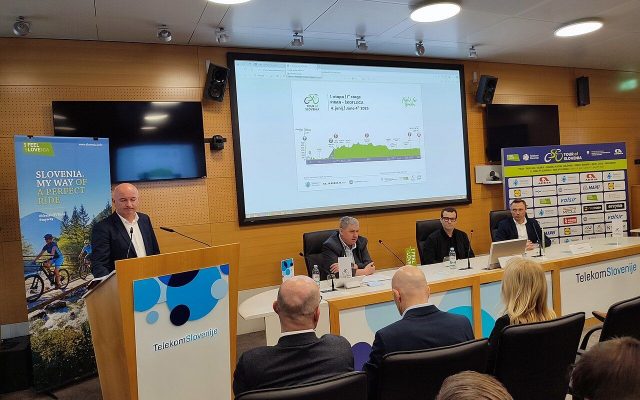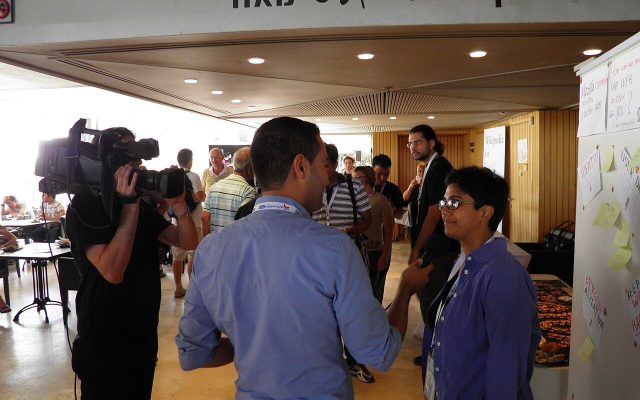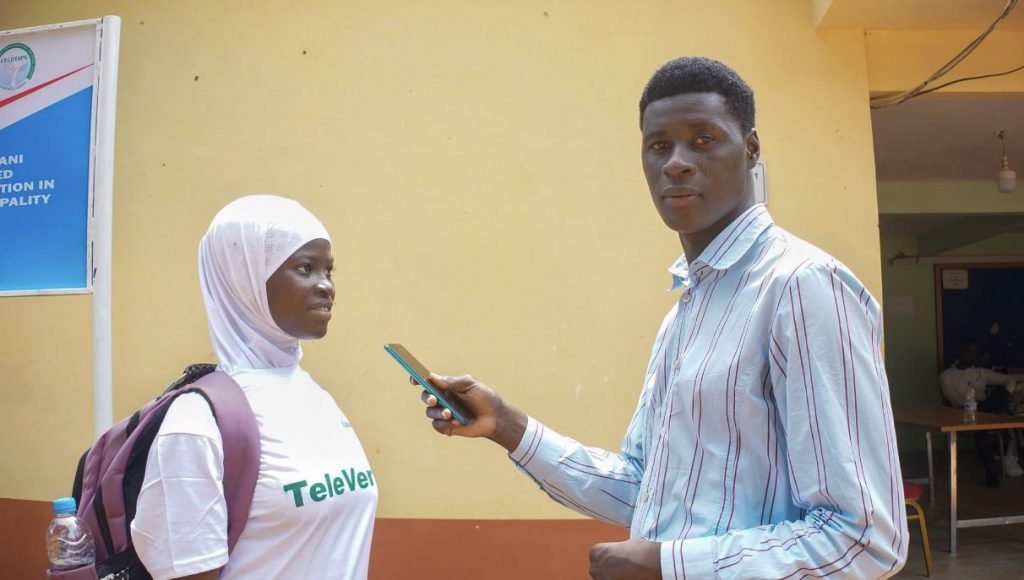
Journalists can help an NGO reach audiences it could never afford to reach with advertising: decision-makers, potential donors, volunteers and the wider public. Yet many organisations approach media relations as a one-way broadcast, sending press releases into a void and wondering why nothing is published. The NGOs that get consistent, accurate coverage treat media relations as relationship-building. They understand what journalists need, offer genuinely useful stories and sources, and behave reliably over time. This guide covers the practical essentials, from building a media list to giving interviews and running an online newsroom.
Media relations starts with what journalists need
Journalists are busy, often working to tight deadlines with shrinking newsrooms. They are not there to promote your organisation; they are there to serve their audience. A story is more likely to be covered if it offers:
- Newsworthiness: something new, surprising, timely, local, human or significant.
- Relevance: a clear link to that outlet’s audience and the journalist’s beat.
- Evidence: credible data, research or first-hand experience.
- People: authentic voices, ideally those directly affected, who have given informed consent.
- Practicality: available spokespeople, good images and clear facts, delivered on time.
Before contacting anyone, ask yourself honestly: Why would this outlet’s audience care about this, today? If you cannot answer in one sentence, the story probably isn’t ready.
Build a targeted media list
A media list is a curated database of journalists, editors, producers and other content creators relevant to your work. Quality matters far more than size. A list of twenty journalists who cover your issue is more valuable than a purchased list of thousands.
How to build it
- Define your audiences. Who do you need to reach: policymakers, local communities, donors, specialist sectors?
- Identify the outlets they use: national and regional press, broadcast, trade publications, specialist newsletters, podcasts and credible online creators.
- Find the right individuals by reading, watching and listening to their recent work. Note their beats and the angles they favour.
- Record useful details: preferred contact method, deadlines, past coverage of your issue, interactions with your organisation.
- Keep it clean and lawful. Update it regularly and handle personal data in line with GDPR, including having a legitimate basis for processing and honouring requests to be removed.
| Field | Example of what to record |
|---|---|
| Name and outlet | Journalist’s name; publication or programme |
| Beat / topics | Migration, health, environment, local affairs |
| Audience | National policy readers; regional families; sector professionals |
| Preferred contact | Email; phone only for breaking news |
| Deadlines and rhythm | Weekly feature desk; daily news |
| Recent relevant pieces | Short notes on their latest coverage of your issue |
| History with us | Previous interviews, stories, feedback |
| Relationship owner | Staff member responsible for contact |
Your media list is a subset of your wider stakeholder map. Thinking about journalists as stakeholders with their own interests is a useful shift, and it is one we explore in our Mastering Public Relations workshop.
Pitch stories, not organisations
A pitch is a short, personal message suggesting a story to a specific journalist. It should be tailored, brief and focused on the story rather than on your organisation.
Pitch email checklist
- A specific subject line that summarises the story, not “Press release” or “Story idea”.
- A first sentence that states the news or human angle.
- One line on why it matters to their audience now.
- What you can offer: an interview, a case study (with consent), data, a site visit, images.
- Your availability and direct contact details.
- Fewer than 200 words; the full release can be linked or pasted below.
Hypothetical pitch: “Subject: Rural clinics in [region] report rise in heat-related cases. Hi [Name], I read your piece last month on summer heat and older people. Our health workers in [region] are seeing more heat-related cases at rural clinics, and we have just published a short field survey on how clinics are coping. Our regional health coordinator is available for interview this week, and two clinic nurses are willing to speak about what they see day to day. Happy to share the survey and photos. [Contact details].”
Follow up once, a few days later, with something new if possible: a fresh angle or an additional resource. Repeated “Did you get my email?” messages damage relationships.
Structure press releases for busy readers
A press release remains useful, especially as a reference document and for your online newsroom. Use the inverted pyramid: the most important information first, supporting detail after.
| Element | Purpose | Tips |
|---|---|---|
| Release status | “For immediate release” or embargo details | State embargo date, time and time zone clearly |
| Headline | Communicates the news in one line | Active verb; no jargon; under about 15 words |
| Subheading (optional) | Adds a key detail or figure | One sentence |
| Dateline and lead paragraph | Who, what, where, when, why | Should make sense if nothing else is read |
| Body paragraphs | Context, evidence, impact | Short paragraphs; source any figures |
| Quote | Human perspective or opinion | Say something a fact cannot; avoid “We are delighted to announce” |
| Call to action / further information | What happens next; where to learn more | Link to your online newsroom |
| Notes to editors | Organisation boilerplate, methodology, photo info | Keep the boilerplate brief and factual |
| Media contact | Who to call | A name, a phone number that will be answered and an email address |
Writing tightly for offline and online media is a skill that improves with practice and feedback; it is a core module of our PR training for NGOs.
Use embargoes carefully
An embargo is a request that journalists do not publish information before a specified date and time. It gives reporters time to prepare quality coverage of, for example, a report launch, while ensuring everyone publishes simultaneously.
- Use embargoes only when there is a real reason, such as a complex report journalists need time to read.
- Agree the embargo before sending information, ideally getting explicit acceptance.
- State the exact date, time and time zone at the top of the release.
- Send embargoed material only to journalists you trust, and remember an embargo is an agreement, not a legal guarantee.
- Have a plan in case it breaks: be ready to lift the embargo for everyone and publish your materials immediately.
Prepare for interviews
Interviews are where relationships are made or lost. Preparation matters, whether it is a five-minute phone call or a live broadcast.
Before the interview
- Ask about the format, length, angle, other interviewees and deadline.
- Agree on two or three key messages and supporting facts or stories.
- List difficult questions and practise answering them aloud.
- Check any figures you plan to use and have sources ready.
- Consider whether a case study participant should be involved, and only with informed consent and appropriate support.
During the interview
- Lead with your most important point; you may not get a second chance.
- Use plain language, concrete examples and short sentences.
- If you don’t know an answer, say so and offer to follow up.
- Bridge politely from off-topic questions back to your key messages, without ignoring the question.
- Assume everything is recorded and may be published, including before and after the formal interview.
On the record, off the record and background
These terms are widely used but not universally defined, which is exactly why they cause problems. Typical meanings are:
- On the record: everything can be published and attributed to you by name.
- On background (not for attribution): information can be used but attributed only to a general description, such as “an aid worker in the region”.
- Off the record: information is not for publication, though it may guide the journalist’s further reporting.
Always agree the terms explicitly before sharing information, not afterwards. For most NGO staff, the safest practice is simple: speak on the record, and if something should not be published, do not say it. Organisations should have a clear media policy stating who may speak to journalists and on what terms.
Follow up and nurture the relationship
Media relations is a long game. The way you behave after a story appears shapes whether a journalist calls you next time.
- Thank the journalist when a story is published, briefly and sincerely.
- Correct only significant factual errors, politely and with evidence. Do not complain about angle or tone.
- Share the coverage with your stakeholders and on your channels.
- Become a reliable source: respond quickly, offer expertise on related stories even when there is nothing in it for your organisation, and recommend other experts when you are not the right fit.
- Track results meaningfully. The Barcelona Principles for PR measurement caution against relying on advertising value equivalents; focus instead on outcomes such as message accuracy, reach among target audiences and resulting actions.
Create a useful online newsroom
An online newsroom (or press page) lets journalists find what they need at any hour. Keep it simple and current:
- Named media contact with phone and email, including out-of-hours arrangements.
- Recent press releases and statements, newest first.
- A short fact sheet about your organisation and its work.
- Spokesperson bios and areas of expertise.
- High-resolution photos and logos with credits and confirmation of consent.
- Key reports and data, with methodology notes.
Your newsroom also supports your wider digital presence and campaigns, which are covered from a marketing perspective in our Mastering Marketing workshop.
Common mistakes to avoid
- Mass emailing everyone. Untargeted releases are ignored and can lead to being blocked.
- Burying the news. Long introductions about your organisation lose readers.
- Missing deadlines. If you promise a call back in an hour, call back in an hour.
- Overstating evidence. Exaggerated claims damage credibility for years.
- Exposing vulnerable people. Consent, dignity and safety must come before a strong story.
- Only calling when you need something. Relationships built during quiet times pay off in busy ones.
Key takeaways
- Media relations is about relationships and useful stories, not broadcasting.
- Build a small, targeted, GDPR-compliant media list and keep it up to date.
- Pitch personally and briefly, focusing on why the story matters to that audience.
- Structure press releases with the inverted pyramid and clear contact details.
- Use embargoes sparingly and agree interview terms before you speak.
- Follow up graciously, measure outcomes and keep a helpful online newsroom.
Ready to build stronger relationships with journalists? Our one-day Mastering Public Relations workshop in Brussels covers media relations, writing for offline and online media and PR ethics, with practical exercises based on real NGO situations. For individual interview preparation, explore our 1:1 coaching.